
Middle East News: What Happened Last Week (May 2026 Recap)
From Iranian missile salvos and Israeli airstrikes to Houthi attacks in the Red Sea and a US carrier reinforcement, here's a clear, day-by-day recap of what just happened across the Middle East — and what it means for next week.
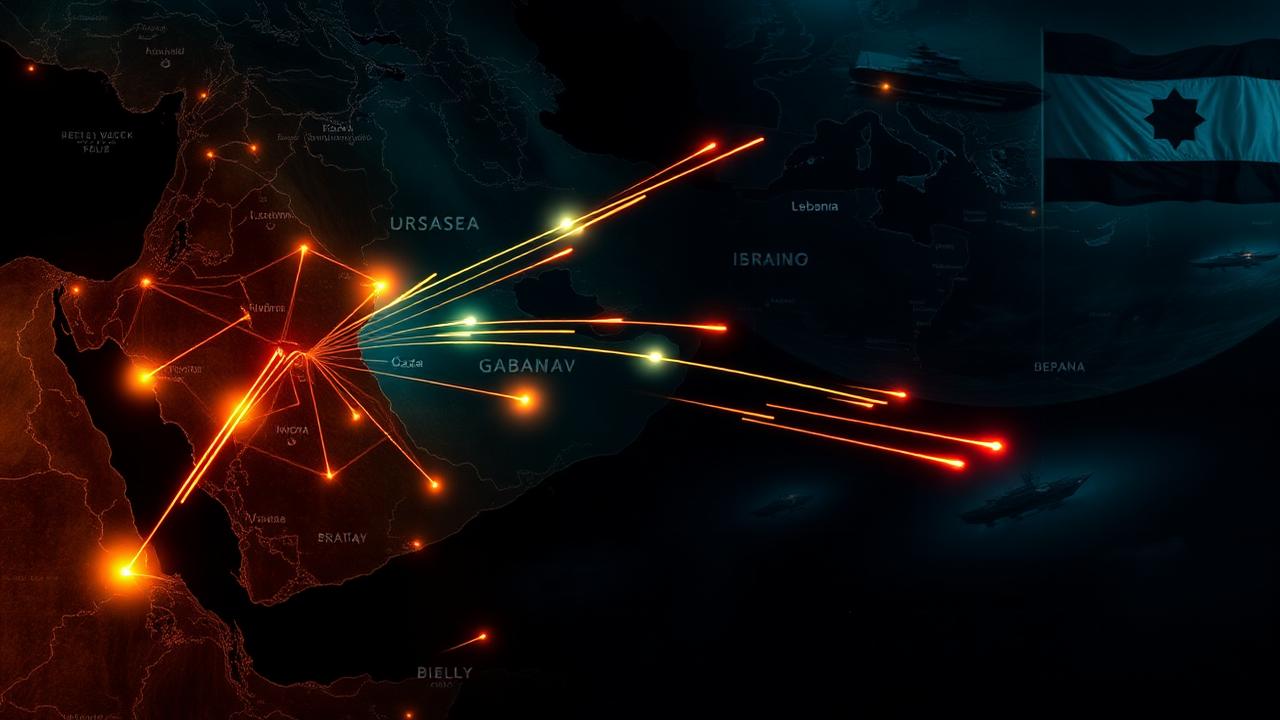
Last week was one of the most intense seven-day stretches the Middle East has seen in months. Iran and Israel traded direct strikes, Gaza took another devastating hit, Hezbollah and Hamas issued fresh threats, the Houthis stepped up attacks in the Red Sea, and Washington quietly moved more firepower into the region. Here's a clear, day-by-day recap of what actually happened — without the noise — and what to watch in the days ahead.
The big picture
Three storylines drove the week. First, the Iran–Israel shadow war stopped being a shadow and became open exchanges of fire. Second, Gaza remained a humanitarian catastrophe with no real ceasefire in sight. Third, the Red Sea and Strait of Hormuz turned into the biggest economic risk node for global markets, with shipping costs climbing and insurance premiums spiking. Background context on the broader conflict is well summarised by Reuters Middle East and Al Jazeera.
Day-by-day: what happened last week
Monday — Iranian missile and drone salvo
The week opened with Iran launching a coordinated wave of ballistic missiles and one-way attack drones at military targets inside Israel. Most were intercepted by Israel's multi-layered air defenses (Arrow, David's Sling and Iron Dome), with additional support from US Navy destroyers in the eastern Mediterranean. A small number got through, causing damage at an airbase in the south and several civilian injuries. Iran framed the strike as retaliation for an earlier Israeli operation against IRGC commanders in Syria.
Tuesday — Israeli retaliation deep inside Iran
Within 24 hours, Israel struck back. The IDF targeted IRGC infrastructure, drone production facilities and radar sites in western Iran. Unlike previous rounds, Israeli officials publicly confirmed the strikes within hours, signaling a more open posture. Tehran admitted "limited damage" but vowed a "decisive response at the time and place of our choosing."
Wednesday — Gaza escalation and humanitarian collapse
While the world watched Iran and Israel, the war in Gaza intensified. Ground operations expanded in Rafah and central Gaza, with heavy civilian casualties reported by local hospitals. The UN warned that food and medical supplies are now at "famine-trigger" levels in several northern districts. Talks in Doha mediated by Qatar and Egypt stalled again over the framework for hostage releases and a phased ceasefire.
Thursday — Hezbollah and the northern front
Hezbollah launched its largest rocket and drone barrage of the month into northern Israel, targeting military positions in the Galilee. Israel responded with airstrikes across southern Lebanon, hitting weapons depots and command posts. Several Lebanese border villages were evacuated. The risk of a full second front is the highest it has been all year, though both sides still appear to want to avoid all-out war.
Friday — Houthis hit the Red Sea again
Yemen's Houthi forces struck two commercial vessels in the Red Sea with anti-ship missiles and drones, including one tanker that caught fire before its crew was rescued by a coalition warship. Major shipping lines extended their diversions around the Cape of Good Hope, adding 10–14 days to Asia–Europe routes and pushing container rates higher. The US, UK and allied navies carried out fresh strikes on Houthi launch sites inside Yemen.
Saturday — US reinforces, diplomacy intensifies
The Pentagon confirmed the deployment of an additional carrier strike group to the region, joining forces already on station. Secretary of State-level calls between Washington, Riyadh, Abu Dhabi, Cairo, Ankara and European capitals tried to keep a lid on the escalation. Behind the scenes, Oman and Qatar continued back-channel talks with Tehran. President Trump used a rally to issue another stark warning to Iran, while insisting the US is "not seeking war."
Sunday — Markets brace, region holds its breath
By the weekend, no new major strikes were reported, but the region was clearly on edge. Iranian state media talked up new "options," Israeli officials hinted at further action if attacks continue, and traders began pricing in a higher geopolitical risk premium for the week ahead — visible in oil, gold, the dollar and defense stocks.
Who is involved — a quick map
- Iran — direct missile and drone attacks on Israel, plus support for Hezbollah, Hamas, the Houthis and Iraqi militias.
- Israel — strikes inside Iran, ongoing operations in Gaza and Lebanon, mobilization of additional reserves.
- United States — defensive support for Israel, two carrier strike groups in the region, strikes on Houthi sites, intense diplomacy.
- Hezbollah (Lebanon) — heaviest cross-border barrage of the month into northern Israel.
- Hamas (Gaza) — continued rocket fire and ground clashes; hostage negotiations stalled.
- Houthis (Yemen) — fresh attacks on Red Sea shipping, more vessels diverted.
- Gulf states — Saudi Arabia, UAE, Qatar and Oman working behind the scenes to prevent regional war.
Why this matters beyond the region
The Middle East is not just a humanitarian story — it's a global economic story. Roughly a third of seaborne oil moves through the Strait of Hormuz, and around 12% of world trade normally moves through the Red Sea and Suez Canal. Any serious disruption shows up in:
- Oil prices — Brent already carries a clear war premium and would spike on any real Hormuz incident.
- Inflation — higher shipping and energy costs feed straight into headline CPI.
- Central bank policy — sticky inflation complicates Fed and ECB rate-cut plans.
- Equities — defense and energy names benefit, airlines and cruise lines suffer.
- Safe havens — gold, the US dollar and Treasuries see steady inflows on every flare-up.
What to watch this coming week
- Iranian response — Tehran has openly promised retaliation. Watch for strikes via proxies first, direct missiles only if pushed.
- Hezbollah tempo — sustained heavy barrages would be the clearest sign of a second front opening.
- Red Sea shipping — more attacks would lock in higher freight rates and keep upward pressure on goods inflation.
- Gaza ceasefire talks — any breakthrough in Doha or Cairo would calm markets fast; another collapse would not.
- US posture — additional military deployments, sanctions or strikes will set the tone for the dollar, oil and equities.
- Diplomatic signals from Riyadh, Abu Dhabi and Ankara — Gulf and Turkish positioning often previews the next phase.
How to read the headlines without losing your mind
Three quick rules that worked well last week and will keep working:
- Separate signal from spectacle. Most "breaking" alerts are not strategic shifts. Wait for confirmation from at least two serious outlets before reacting.
- Watch what militaries do, not what politicians say. Troop movements, carrier deployments and airspace closures matter more than rally speeches.
- Follow the money. Oil, gold, the dollar and defense stocks are the cleanest real-time gauge of how professionals are pricing risk.
Bottom line
Last week marked a clear step-up in the Middle East conflict: Iran and Israel hit each other directly, Gaza got worse, Hezbollah turned up the heat in the north, the Houthis kept the Red Sea dangerous, and the US doubled down on deterrence. None of the major players seems to want a full regional war — but the margin for error is now uncomfortably thin. Expect more headlines, more market volatility and more diplomatic fire-fighting in the days ahead. For related coverage on how markets reacted, see our Middle East and markets week-ahead recap and the Trump, Middle East and markets update.
Frequently asked questions
- What happened in the Middle East last week in one sentence?
- Iran and Israel exchanged direct strikes, Gaza fighting intensified, Hezbollah ramped up rocket fire from Lebanon, the Houthis hit more Red Sea ships, and the US sent another carrier group to the region.
- Is there a full-scale war between Iran and Israel now?
- Not yet. There were direct strikes both ways last week, but both governments are still trying to keep the conflict below the threshold of a full regional war.
- Why are oil prices reacting so much?
- About a third of seaborne crude moves through the Strait of Hormuz and a large share of global trade through the Red Sea. Any threat to those routes pushes a risk premium straight into oil and shipping prices.
- What is the US doing officially?
- The US is providing defensive support to Israel, has two carrier strike groups in the region, is striking Houthi positions in Yemen and is leading intense diplomacy to prevent a wider war — while publicly saying it does not want direct conflict with Iran.
- What should I watch next week?
- Watch Iran's next response, Hezbollah's rocket tempo, Red Sea shipping attacks, Gaza ceasefire talks in Doha and Cairo, US military moves, and how oil, gold and the dollar trade as a real-time risk gauge.
Enjoyed this article?
Share it, drop a comment, and subscribe to our weekly digest for the best AI tools and trends.
Related articles
Middle East War 2026: Iran, USA and Israel — What's Really Happening and Why It Matters
Tensions between Iran, Israel and the United States have escalated into the most dangerous Middle East confrontation in a generation. Here's a clear, balanced breakdown of how we got here, what's happening on the ground, and what it means for the rest of the world.

Markets Recap May 2026: Forex, Stocks & What Trump Just Did to Wall Street
From record-breaking tech rallies to dollar swings on Trump's latest tariff threats, here's a clear, no-jargon recap of the week that just shook forex, stocks and crypto markets.
Middle East War Recap & Markets Week Ahead: What Traders Must Watch (May 2026)
Strikes intensified, oil spiked, the dollar swung. Here's a clean recap of the Middle East conflict and what every market — forex, stocks, oil, gold, crypto — is set up to do next week.