
Trump Today, Middle East War & Markets: What's Moving the World on May 10, 2026
From Trump's latest tariff and Iran threats to fresh strikes across the Middle East and a violent move in oil, the dollar and tech stocks — here is your full Sunday briefing for May 10, 2026.
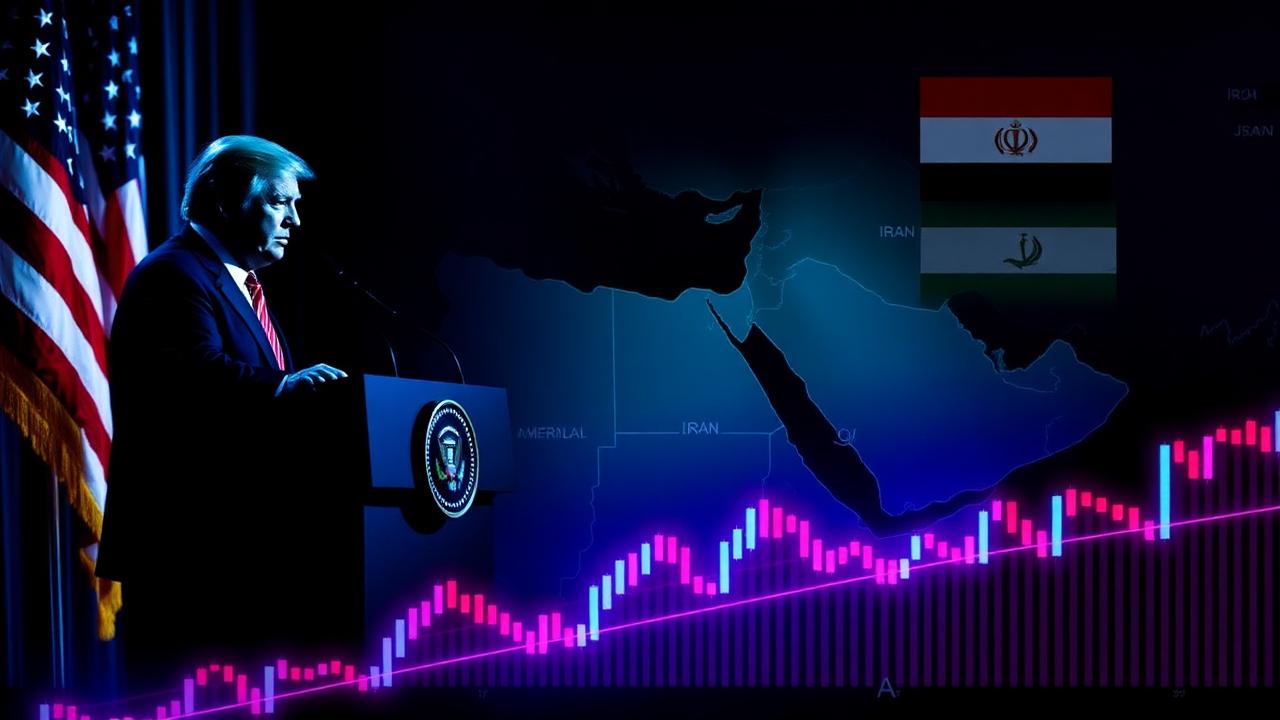
It's Sunday, May 10, 2026, and the news cycle is once again being driven by three intertwined stories: Donald Trump's latest comments, the still-escalating Middle East war involving Iran, Israel and the United States, and a financial market that is trying to price all of it at once. Here is what is actually going on, why it matters, and how traders and investors are positioning into next week.
What Trump said today
Speaking from Mar-a-Lago and then again on his social platform, President Trump delivered a packed Sunday of headlines. The most market-moving lines:
- Iran: Trump warned that "if one more American is touched, Iran will pay a price they have never seen." He repeated that he does not want a "forever war" but said US carriers in the region are "ready in minutes, not days."
- Israel: He reiterated "ironclad" support for Israel and said the US is sharing real-time intelligence on Iranian missile launches and Houthi drone activity.
- Tariffs: Trump teased a new round of tariffs on Chinese EVs, semiconductors and solar — "bigger than people expect" — to be announced "in the next two weeks."
- The Fed: He again attacked Jerome Powell for being "too slow" to cut rates and floated naming a successor "much earlier than the market thinks."
- Energy: "Drill, baby, drill" — he promised faster permitting and said he would push OPEC privately to keep oil "reasonable" so the war does not break consumers.
- Crypto: Trump again called Bitcoin "American freedom money" and hinted at an executive order expanding the strategic Bitcoin reserve.
Bond traders cared most about the Powell line; FX traders cared about tariffs; commodity desks cared about Iran. All three reactions hit in the same 30-minute window.
Middle East war: where things stand tonight
The fighting that intensified last week has not cooled. Over the past 24–48 hours:
- Iran launched a fresh wave of ballistic missiles and drones at Israeli air bases and a logistics hub near Eilat. Israel says most were intercepted by Arrow-3 and David's Sling, with help from US Aegis destroyers in the eastern Mediterranean.
- Israel hit IRGC command nodes near Isfahan and Kermanshah, plus suspected missile production sites. Targeted strikes — not regime change — remains the stated doctrine.
- The United States reinforced its carrier presence with a second strike group and is running B-2 sorties out of Diego Garcia as a deterrent signal. US officials publicly insist they are not at war with Iran, but privately admit the line is "very thin."
- Houthis attacked another tanker in the Red Sea, pushing more shipping back around the Cape of Good Hope and adding to freight costs.
- Hezbollah kept up cross-border fire on northern Israel but stopped short of full-scale war — for now.
- Gulf states (Saudi Arabia, UAE, Qatar) are pushing hard for a ceasefire framework. Oman is again playing back-channel mediator with Tehran.
The key tail risk markets are watching is the Strait of Hormuz. Roughly 20% of global oil and a third of LNG transits there. Any serious closure attempt — even a few days — would send Brent through $100 almost instantly.
How markets are reacting
Stocks
US futures going into Sunday night trade are mixed. The setup:
- S&P 500: closed Friday near 5,260, roughly flat on the week. Defense (LMT, NOC, RTX, GD) and energy (XOM, CVX, OXY) outperformed; airlines, cruise lines and some semis lagged on Iran headlines.
- Nasdaq 100: AI leaders held up — Nvidia, Broadcom and Microsoft remain the "war-proof" trade as long as capex narratives stay intact.
- Europe: Stoxx 600 underperformed on energy import risk; DAX dragged by autos exposed to tariff threats.
- Asia: Nikkei resilient thanks to a weaker yen and defense names; Hang Seng and Shanghai sold off on Trump's tariff comments.
Earnings season is winding down with blended S&P 500 EPS growth around 8% YoY, beating expectations. That's the cushion bulls keep leaning on.
Forex
- DXY: back above 105 as safe-haven flows and tariff talk lift the dollar.
- EUR/USD: heavy near 1.0880, with 1.0820 the next big technical level.
- USD/JPY: hovering around 156 — BOJ intervention risk is real above 158.
- USD/CHF: the franc is bid on every Iran headline. Below 0.8950 means risk-off is winning.
- USD/CAD: stuck between an oil bid for CAD and a strong-dollar bid for USD. Range 1.36–1.38.
- GBP/USD: 1.2650 pivot. BoE is still expected to cut before the Fed, capping rallies.
Oil and commodities
- Brent: ~$88 with a clear war premium of $6–$8. A confirmed Hormuz incident pushes it to $95+ in a single session.
- WTI: ~$84, watching $86 resistance.
- Natural gas (Europe TTF): firmer on LNG re-routing.
- Gold: ~$2,470/oz, less than $30 from all-time highs. Central bank buying + war + Fed-cut hopes is the cleanest macro trade of 2026.
- Silver: ~$28.80, lagging gold but coiling.
Crypto
Bitcoin is trading around $67,500, holding the $65K shelf through the weekend despite war headlines. Trump's "freedom money" comment gave it a small bid. Ether is stuck near $3,050. AI-themed tokens (FET, RNDR, TAO) outperformed on the back of last week's enterprise AI news.
Macro catalysts for the week ahead
- US CPI (Wednesday): the single biggest data point. A cooler print revives Fed-cut hopes and caps the dollar; a hot print sends yields back to 4.60%+.
- US retail sales and PPI later in the week.
- Eurozone Q1 GDP revision and German ZEW.
- UK jobs and GDP — directly affecting GBP and BoE pricing.
- Fed speakers: Powell, Williams and Waller all on the calendar. Expect "data-dependent, no rush" language.
- Geopolitics: any Iran retaliation, Houthi strike on a major tanker, or Hormuz disruption is the overriding tape.
How traders are positioning
Talking to desks heading into Monday's open, the consensus playbook looks like this:
- Long defense and energy as a war hedge, paired with selective AI longs (Nvidia, Microsoft, Broadcom).
- Long gold as the cleanest expression of "Fed cuts + war + dollar wobble" — many funds have it at the highest weight in years.
- Short-dated S&P puts or VIX call spreads as cheap insurance into CPI.
- Long USD/CHF downside or EUR/CHF puts for pure safe-haven exposure.
- Tactical oil calls on Brent (strikes $92–$95) targeting any Hormuz headline.
- Smaller crypto positions, with Bitcoin used more as a "second gold" than a high-beta tech proxy.
What could change the picture fast
- A US service member killed in the region — would force a much harder response.
- Iran formally moving to close or mine the Strait of Hormuz.
- Hezbollah opening a full second front against northern Israel.
- A surprise ceasefire announcement (Qatar/Oman channel).
- A clearly hot or cold US CPI print.
- Trump signing a tariff executive order earlier than expected.
For deeper background on the war recap and last week's market action, see our earlier briefings: Middle East war recap and the week ahead and last week's markets and Trump recap.
Bottom line
Today is not a "trade the news" day — it is a "respect the news" day. Trump is loudly setting the policy tape for tariffs, the Fed and Iran. The Middle East war has not de-escalated. Markets are holding up only because earnings are decent and AI capex is still a one-way trade. Cut size, hedge the tails, and let CPI decide whether the bid stays under risk assets or the dollar takes over again.
Frequently asked questions
- What did Trump say today about Iran?
- He warned that any harm to a US service member would trigger a response 'Iran has never seen,' while also saying he does not want a long war. He emphasized US carrier readiness in the region.
- Is the US officially at war with Iran?
- No. The US is providing defensive support to Israel, has reinforced its carrier presence and is conducting deterrent flights, but Washington publicly insists it is not in a direct war with Tehran.
- Why is oil not higher given the war?
- Because no major supply node has been hit yet. Brent already carries a $6–$8 war premium. The big move comes only if the Strait of Hormuz or a key Saudi or UAE facility is actually disrupted.
- What is the single biggest catalyst next week?
- US CPI on Wednesday. It controls Fed-cut pricing, which in turn drives the dollar, gold, tech stocks and crypto.
- How should a small investor hedge this?
- Trim leverage, keep a higher cash buffer, hold some gold, and avoid concentrated bets in airlines, cruise lines or single-country emerging market funds until the geopolitics calm down.
Enjoyed this article?
Share it, drop a comment, and subscribe to our weekly digest for the best AI tools and trends.
Related articles
Middle East War 2026: Iran, USA and Israel — What's Really Happening and Why It Matters
Tensions between Iran, Israel and the United States have escalated into the most dangerous Middle East confrontation in a generation. Here's a clear, balanced breakdown of how we got here, what's happening on the ground, and what it means for the rest of the world.

Markets Recap May 2026: Forex, Stocks & What Trump Just Did to Wall Street
From record-breaking tech rallies to dollar swings on Trump's latest tariff threats, here's a clear, no-jargon recap of the week that just shook forex, stocks and crypto markets.
Middle East War Recap & Markets Week Ahead: What Traders Must Watch (May 2026)
Strikes intensified, oil spiked, the dollar swung. Here's a clean recap of the Middle East conflict and what every market — forex, stocks, oil, gold, crypto — is set up to do next week.