
Middle East War 2026: Iran, USA and Israel — What's Really Happening and Why It Matters
Tensions between Iran, Israel and the United States have escalated into the most dangerous Middle East confrontation in a generation. Here's a clear, balanced breakdown of how we got here, what's happening on the ground, and what it means for the rest of the world.
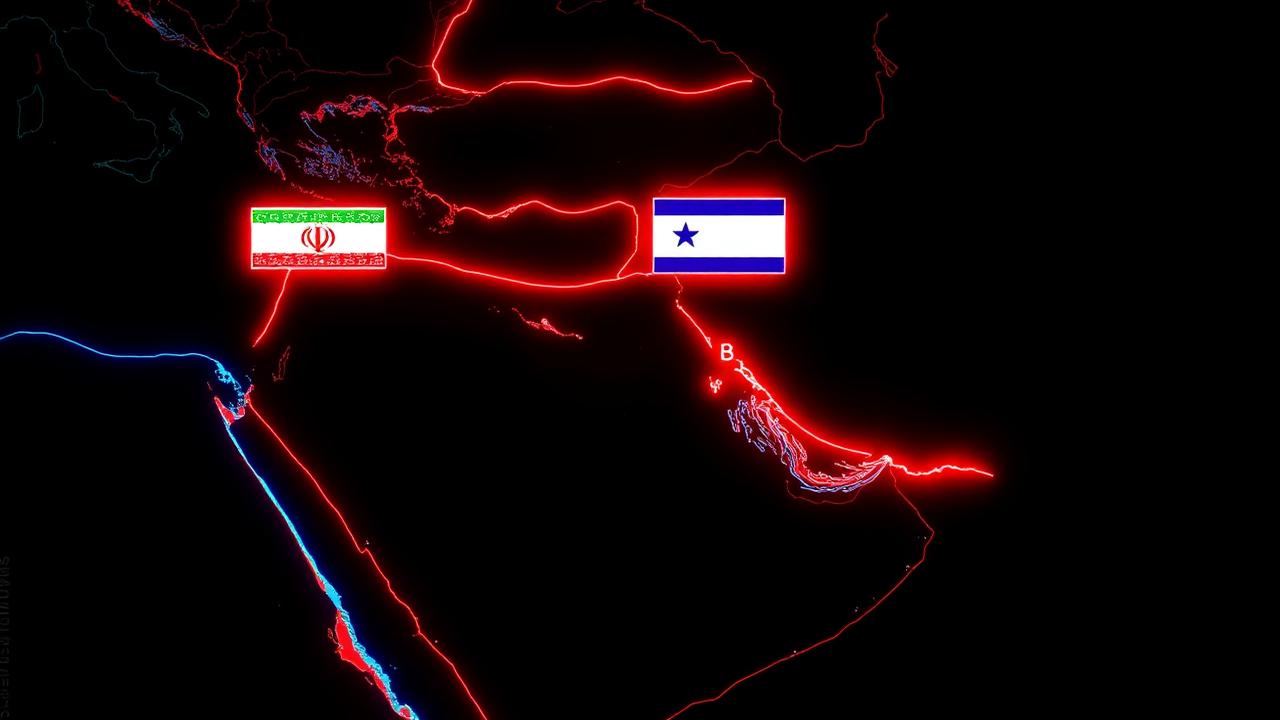
The Middle East is once again at the center of global anxiety. Over the past year, a slow-burning conflict between Iran, Israel and the United States has hardened into something that looks dangerously close to a regional war. Markets are nervous, oil is volatile, and millions of civilians across the region live under the daily threat of strikes, sanctions and cyberattacks. This explainer cuts through the noise: what is actually happening, how we got here, and what the next phase could look like.
This article is intentionally balanced. It is not pro-Iran, pro-Israel, pro-USA or pro any other actor. The goal is clarity — for readers, business owners, students and anyone trying to understand why this story keeps dominating the news cycle in 2026.
How we got here: a short history of the rivalry
The roots of the current crisis stretch back more than four decades, to the 1979 Iranian Revolution that turned a US-aligned monarchy into the Islamic Republic. Since then, three storylines have collided again and again: Iran's regional influence through allied groups, Israel's security doctrine of "no nuclear neighbor," and the United States' role as the dominant military power in the Gulf.
For years these tensions were managed through sanctions, covert operations, proxy battles in Syria, Lebanon, Yemen and Iraq, and on-and-off nuclear negotiations. The 2015 Joint Comprehensive Plan of Action (JCPOA) briefly froze Iran's nuclear program, but after the United States withdrew in 2018 the deal effectively collapsed. By 2024, Iran was enriching uranium close to weapons-grade levels, according to the International Atomic Energy Agency.
What changed in 2025–2026
Three things turned a long-running cold conflict into something hotter:
1. Direct strikes between Iran and Israel
For the first time in their history, Iran and Israel openly traded missile and drone strikes on each other's territory. What used to be fought through proxies — Hezbollah in Lebanon, Hamas in Gaza, the Houthis in Yemen, militias in Iraq and Syria — became a direct, state-to-state exchange. Both sides have shown they can hit the other; both sides have also shown they want to avoid full-scale war. That uneasy balance is exactly what makes the situation so unstable.
2. The nuclear red line
Israel has repeatedly stated it will not allow Iran to acquire a nuclear weapon. As Iran's enrichment levels climbed and inspector access shrank, Israeli officials moved from warnings to active preparation for strikes on nuclear and military sites. The United States has tried to keep diplomacy alive while reinforcing carrier groups, air defenses and bases across the region.
3. The US election cycle and shifting alliances
US foreign policy in 2026 is shaped by domestic politics, war fatigue after Ukraine, and new alignments with Gulf states like Saudi Arabia and the UAE. Russia and China have deepened ties with Tehran, turning the Middle East into a stage where great-power competition plays out in real time.
What's happening on the ground right now
The fighting is not a single front but a network of overlapping conflicts:
- Israel–Iran: Periodic missile and drone exchanges, targeted strikes on military and nuclear infrastructure, and intense cyber operations on both sides.
- Lebanon and Gaza: Continued fighting between Israel and Iran-aligned groups, with severe humanitarian consequences for civilians.
- Red Sea: Houthi attacks on commercial shipping have forced major carriers to reroute around Africa, raising freight costs worldwide.
- Iraq and Syria: US bases face regular drone and rocket attacks from Iran-aligned militias; the US responds with strikes of its own.
- Persian Gulf: Tankers harassed, GPS jamming widespread, insurance premiums for Gulf shipping at multi-year highs.
Why this matters far beyond the Middle East
Oil, gas and your wallet
Roughly a fifth of the world's oil supply moves through the Strait of Hormuz. Even the rumor of a closure sends Brent crude jumping. According to the US Energy Information Administration, disruptions in this corridor historically translate into higher fuel prices, higher airline tickets and higher grocery bills almost everywhere on Earth — including countries that have nothing to do with the conflict.
Global supply chains
Red Sea rerouting adds 10–14 days to shipping times between Asia and Europe. That alone is enough to push up consumer electronics, fashion and auto parts costs, and to delay deliveries during peak seasons.
Refugees and humanitarian pressure
Every escalation produces more displaced people. Lebanon, Jordan, Turkey and parts of Europe are already absorbing massive refugee flows from earlier rounds of conflict. A wider war would dwarf those numbers.
Cybersecurity for ordinary businesses
Iran, Israel and US-aligned actors all run sophisticated cyber programs. Spillover attacks on banks, hospitals, ports and small businesses outside the region have already happened. Any company with weak security posture is, indirectly, on the front line.
The role of AI and technology in this war
This is the first major Middle East confrontation where AI is visibly part of the battlefield:
- Targeting and intelligence: Both Israel and the US use AI systems to fuse satellite imagery, signals intelligence and drone footage, accelerating decision cycles from hours to minutes.
- Drones and loitering munitions: Iran has become a leading exporter of cheap, AI-assisted attack drones; Israel and the US deploy advanced counter-drone systems with machine-learning radar.
- Disinformation: Generative AI is used by all sides to flood social media with synthetic videos, fake news clips and bot-driven narratives. Verifying anything in real time has become extremely difficult.
- Cyber operations: Automated tools probe critical infrastructure 24/7. Defenders increasingly rely on AI-driven detection just to keep up.
For readers, this means one practical thing: be skeptical of dramatic videos and screenshots, especially in the first hours after an event. Cross-check with established outlets like Reuters and BBC Middle East.
What could happen next
Analysts broadly group the next 12 months into three scenarios:
Scenario A — Managed escalation (most likely)
Strikes and counter-strikes continue, but all sides quietly avoid the steps that would trigger full war: closing the Strait of Hormuz, hitting major US bases with mass casualties, or directly attacking nuclear sites in a way that forces an irreversible response. Oil stays volatile, sanctions tighten, diplomacy crawls.
Scenario B — Diplomatic off-ramp
Backchannel talks via Oman, Qatar or Switzerland produce a limited freeze: Iran caps enrichment, the US eases some sanctions, Israel pauses certain operations. Not peace, but a pause. Markets rally, refugees begin to return.
Scenario C — Wider war
A miscalculation — a downed airliner, a strike that kills senior leaders, or a major attack on Gulf energy infrastructure — pushes the conflict into open regional war. The global economy takes a serious hit, energy prices spike, and the US is drawn deeper in.
How ordinary people and businesses can prepare
- Diversify suppliers and shipping routes if your business depends on goods moving through the Suez or Hormuz.
- Harden your cybersecurity — multi-factor authentication, patching, backups and incident response plans are no longer optional.
- Plan for fuel-price volatility in budgets and contracts.
- Follow trusted news sources and ignore unverified viral content.
- Support humanitarian organizations working with civilians displaced by the conflict.
Key takeaways
- The Iran–Israel–USA confrontation is the most serious Middle East crisis in decades.
- It is driven by Iran's nuclear program, regional proxy networks and shifting US alliances.
- The war is already global through oil, shipping, cyber and refugee flows.
- AI is reshaping both the battlefield and the information war around it.
- The most likely path is continued managed escalation — but the risk of a wider war is real.
However the next chapter unfolds, one thing is clear: the world cannot afford to look away. Understanding the Middle East in 2026 is no longer a niche foreign-policy interest — it is essential context for anyone trying to make sense of the global economy, technology and security in the years ahead.
Frequently asked questions
- Is the USA officially at war with Iran in 2026?
- No. As of 2026 the United States and Iran are not in a formal declared war, but they are engaged in repeated military exchanges through strikes, proxy attacks and cyber operations. The situation is best described as an undeclared, low-intensity conflict that could escalate quickly.
- Why is Israel involved in the conflict with Iran?
- Israel views a nuclear-armed Iran and Iran-backed groups like Hezbollah and Hamas as existential threats. Iran in turn rejects Israel's legitimacy and supports armed groups across the region. This long-standing rivalry has now turned into direct missile and drone exchanges between the two states.
- How does this war affect oil and gas prices globally?
- About 20% of the world's oil passes through the Strait of Hormuz near Iran. Any serious escalation pushes oil prices up, which then raises fuel, transport and food prices worldwide — even in countries with no direct involvement in the conflict.
- Could this turn into World War 3?
- Most analysts consider full-scale world war unlikely, because all major powers — including the US, Russia and China — have strong reasons to avoid direct confrontation. However, a wider regional war drawing in multiple states is a realistic risk if escalation is not managed carefully.
- How is AI being used in the Middle East war?
- AI is used by all sides for targeting, intelligence analysis, autonomous drones, cyber defense and disinformation. It speeds up military decision-making but also makes the information environment much harder to trust, since AI-generated videos and posts spread quickly on social media.
Enjoyed this article?
Share it, drop a comment, and subscribe to our weekly digest for the best AI tools and trends.
Related articles

Markets Recap May 2026: Forex, Stocks & What Trump Just Did to Wall Street
From record-breaking tech rallies to dollar swings on Trump's latest tariff threats, here's a clear, no-jargon recap of the week that just shook forex, stocks and crypto markets.
Middle East War Recap & Markets Week Ahead: What Traders Must Watch (May 2026)
Strikes intensified, oil spiked, the dollar swung. Here's a clean recap of the Middle East conflict and what every market — forex, stocks, oil, gold, crypto — is set up to do next week.
Trump Today, Middle East War & Markets: What's Moving the World on May 10, 2026
From Trump's latest tariff and Iran threats to fresh strikes across the Middle East and a violent move in oil, the dollar and tech stocks — here is your full Sunday briefing for May 10, 2026.